1 Introduction · continued
Folk and Moser derived their theory from mode-coupling theory, whereas Bhattacharjee and Ferrell used renormalization-group theory. Nevertheless, the resulting scaling functions have very similar shapes (see Fig. 1.1). Differences include the slopes of the two functions at their half-value frequencies. Unfortunately, Folk and Moser do not provide a closed-form representation of their function that would be useful to experimentalists.
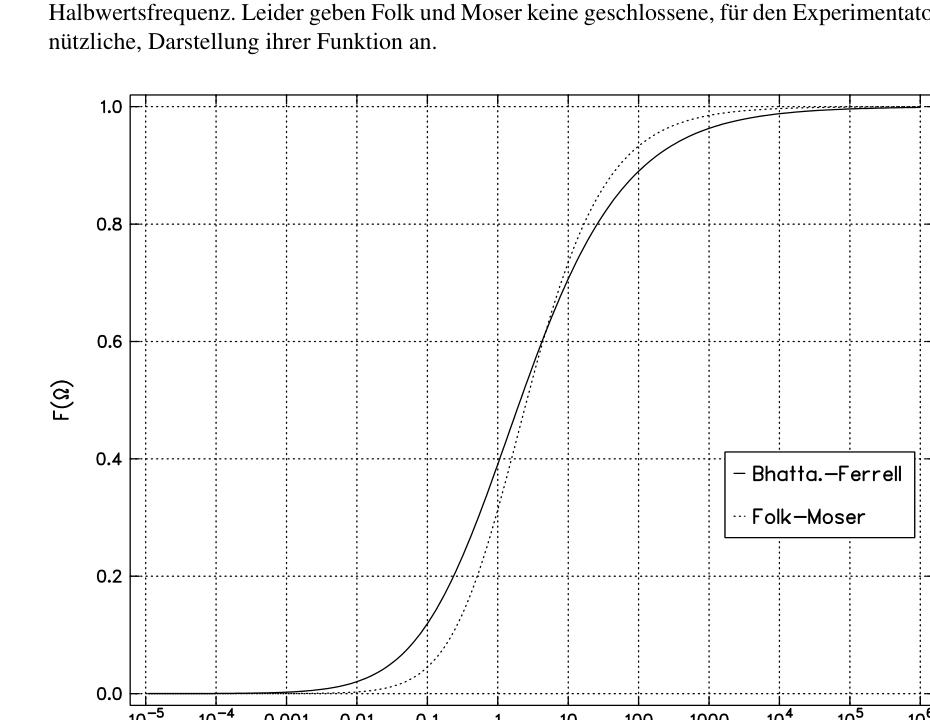
Figure 1.1: Comparison of the scaling functions.
Bhattacharjee and Ferrell, by contrast, give an analytical expression for the scaling function, allowing experimental measurements to be compared with theoretical predictions. Details of their approach and the scaling function itself are discussed in Chapter 3. Verifying this function is one of the aims of this thesis.
The function contains parameters predicted by theory that must nevertheless be established experimentally. The principal method employed in this work is broadband ultrasound spectroscopy. The resulting data and quantities can be compared with those obtained from light scattering, thereby checking the validity of the scaling-function fit in ultrasound spectroscopy.