Chapter 6 · Discussion of the Dynamic Scaling Hypothesis
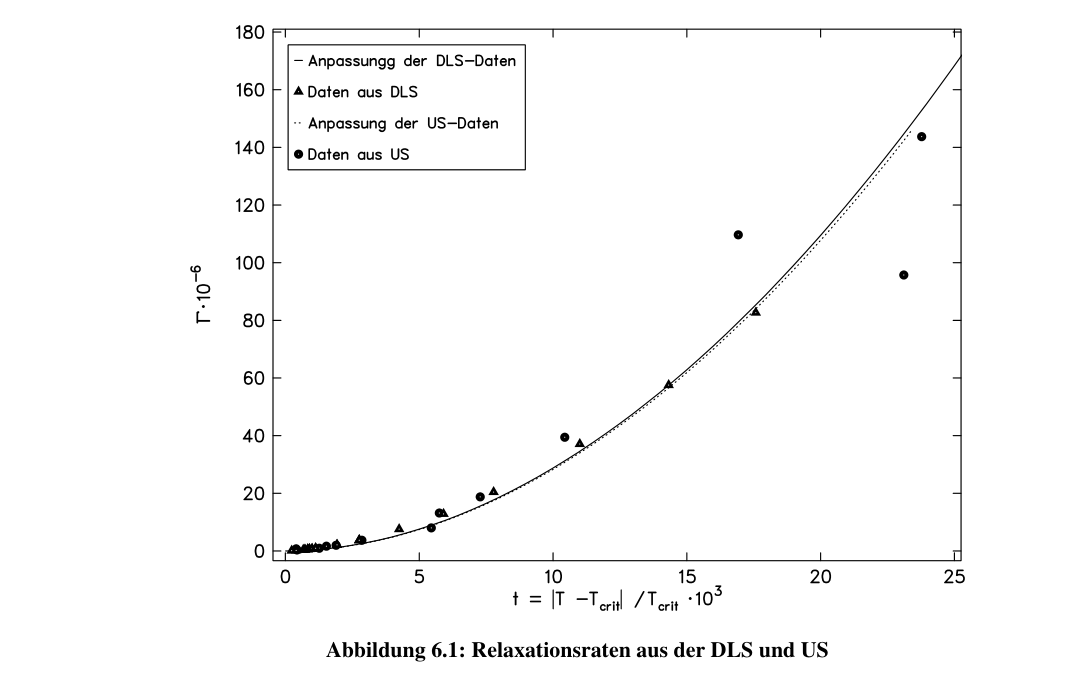
Figure 6.1. Relaxation rates from dynamic light scattering (DLS) and ultrasound (US).
However, the physical validity of fitting method (b) requires careful consideration. The temperature-dependent amplitude is normalized as follows:

This leads to:

In this approach, the temperature dependence is not taken into account, resulting in a form of circular reasoning. According to reference [18], the amplitude is temperature-dependent; accordingly, this parameter should be determined by an unconstrained fit. It is likewise sensible—and indeed necessary—to hold fixed the speed of sound obtained from the ultrasound measurements. Otherwise, the physical significance of the conclusions drawn from the scaling function would be reduced.