Original English dissertation · scientific equations reproduced directly from the source PDF.
5 Experimental Verification of Dynamic Scaling Theories and Discussions
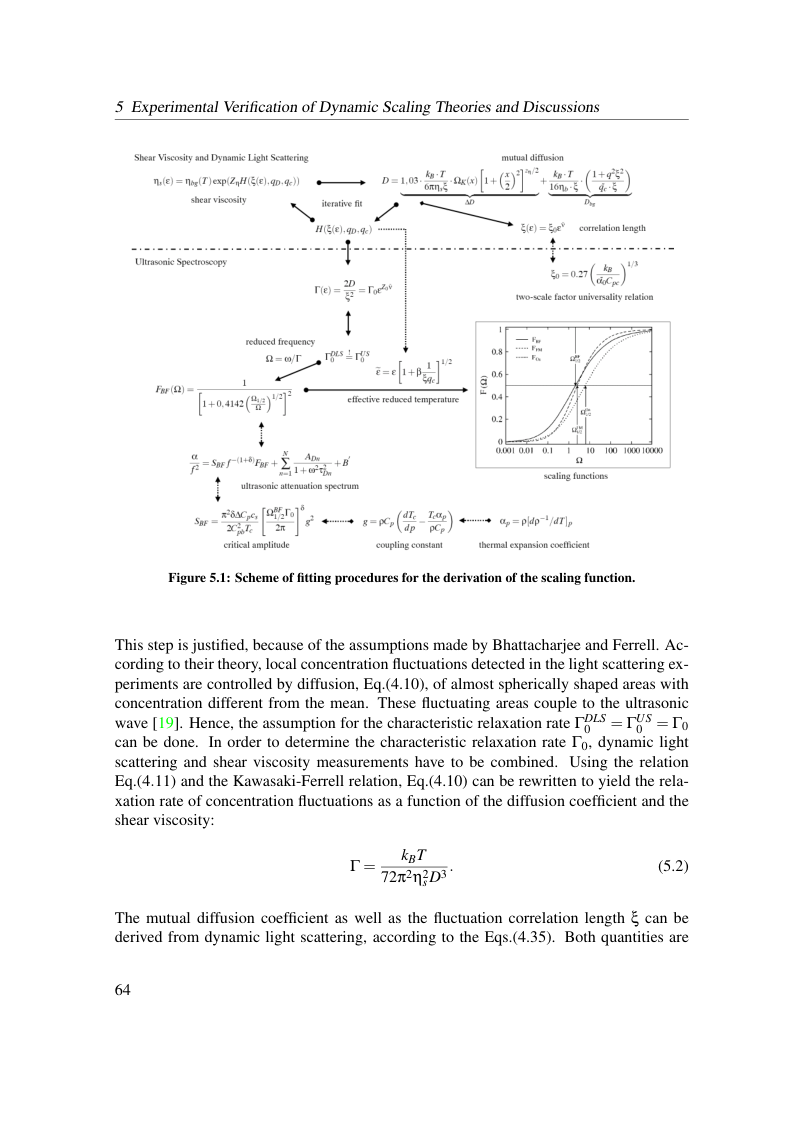
Figure 5.1: Scheme of fitting procedures for the derivation of the scaling function.
This step is justified, because of the assumptions made by Bhattacharjee and Ferrell. Ac- cording to their theory, local concentration fluctuations detected in the light scattering ex- periments are controlled by diffusion, Eq.(4.10), of almost spherically shaped areas with concentration different from the mean. These fluctuating areas couple to the ultrasonic wave [19]. Hence, the assumption for the characteristic relaxation rate ΓDLS 0 = ΓUS 0 = Γ0 can be done. In order to determine the characteristic relaxation rate Γ0, dynamic light scattering and shear viscosity measurements have to be combined. Using the relation Eq.(4.11) and the Kawasaki-Ferrell relation, Eq.(4.10) can be rewritten to yield the rela- xation rate of concentration fluctuations as a function of the diffusion coefficient and the shear viscosity:

The mutual diffusion coefficient as well as the fluctuation correlation length ξ can be derived from dynamic light scattering, according to the Eqs.(4.35). Both quantities are
View original page 70 (authoritative equations, figures and layout)
Original dissertation · PDF page 70 · reader page 61 of 132