Original English dissertation · scientific equations reproduced directly from the source PDF.
3.2 Dynamic light scattering
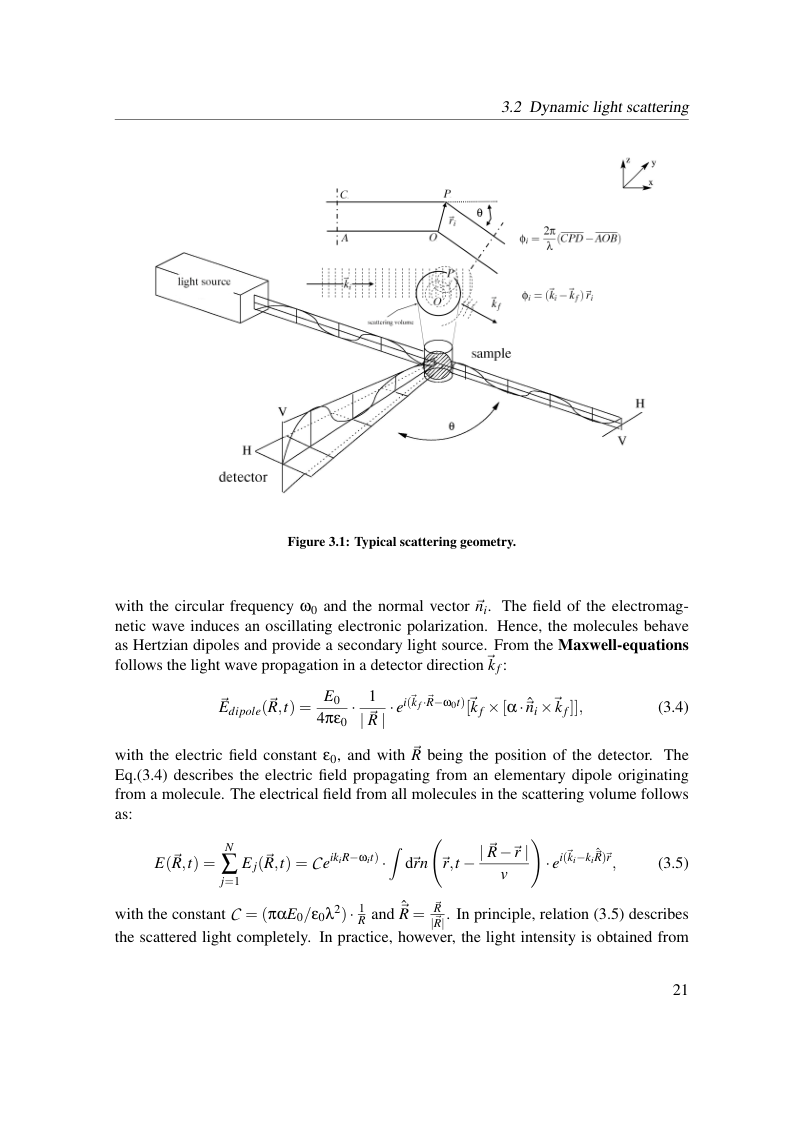
Figure 3.1: Typical scattering geometry.
with the circular frequency ω0 and the normal vector ⃗ni. The field of the electromag- netic wave induces an oscillating electronic polarization. Hence, the molecules behave as Hertzian dipoles and provide a secondary light source. From the Maxwell-equations follows the light wave propagation in a detector direction⃗k f :

with the electric field constant ε0, and with ⃗R being the position of the detector. The Eq.(3.4) describes the electric field propagating from an elementary dipole originating from a molecule. The electrical field from all molecules in the scattering volume follows as:

with the constant C = (παE0/ε0λ2)· 1
R and ˆ⃗R = ⃗R
|⃗R|. In principle, relation (3.5) describes the scattered light completely. In practice, however, the light intensity is obtained from
View original page 27 (authoritative equations, figures and layout)
Original dissertation · PDF page 27 · reader page 19 of 132